CEO Corner: What Happened in That Room
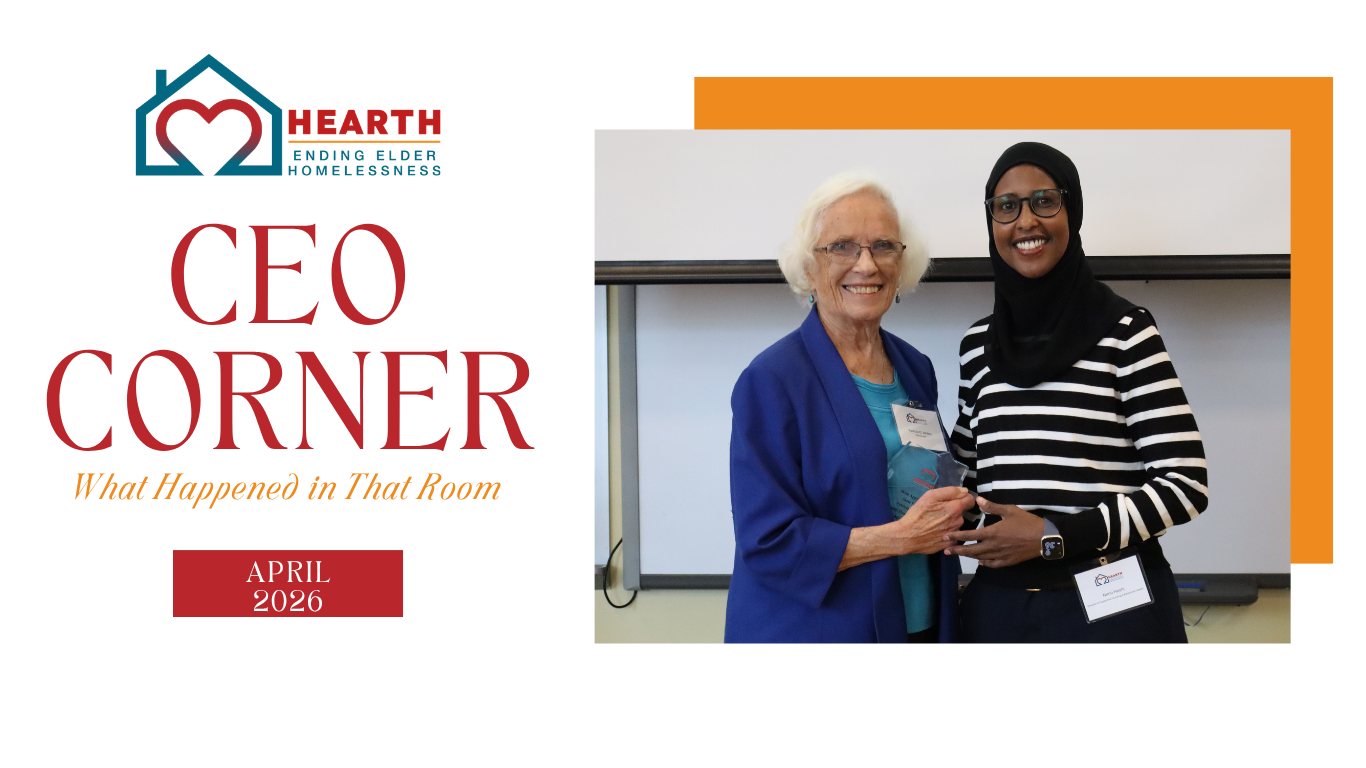
Every year, Hearth holds its annual meeting. And every year, I leave it thinking about what it means to put the right people in a room together.
This year was no different. Except that it was.
My colleague Nimo Hashi, who works directly with our residents every day, stood up and talked about something she called continuous adjustment. Not a program. Not a policy. A practice. The ongoing, daily work of recognizing that stability does not arrive fully formed the moment someone walks through a door. It has to be built, carefully, around the specific person standing in front of you.
She told one story to make it concrete. A resident moves into her own apartment after years without one. Two weeks pass. The staff notices she is not sleeping in her bed. She has been sleeping on a couch in the hallway instead. Not because something went wrong. Because everything she had survived had trained her body for harder surfaces, for noise, for uncertainty. The quiet of her own room did not feel like safety yet. It felt like something unfamiliar. So the team listened, and they adjusted. A firmer mattress. A noise machine. No judgment. The recognition that arriving somewhere safe and feeling safe are two different things, and the distance between them requires patience, attention, and care.
That is what continuous adjustment looks like when it is working.
But the moment from that meeting that I keep returning to is a different one.
A veteran experiencing homelessness attended our annual meeting this year. He came because he had heard there might be services available. What he found instead was a room full of elected officials, housing advocates, funders, and organizational leaders, people whose work is specifically to make sure older adults are not left behind. He had not expected that. He sat down anyway. And then he did something that took real courage: he spoke.
The room listened. People leaned in. By the time he was done, contact information had been exchanged, introductions had been made, and conversations had started that would not have happened any other way. He walked in looking for a referral. He walked out with something closer to a network, and with the knowledge that people in positions to act had heard his story directly.
Nobody planned that moment. There was no agenda item for it. It happened because he showed up, and because the people already in the room were willing to make space, shift their attention, and respond.
That is what Hearth’s annual meeting is for. Not just reporting on the year’s numbers, though those matter. Not just thanking partners, though we are grateful for each of them. It is a place where the work becomes visible in real time, where someone who has experienced homelessness can find himself in a room with people who have the power to help, and where continuous adjustment is not just a concept but something you can watch happen.
These moments do not happen by accident. They happen because this community shows up, year after year, and chooses to stay close to the work.
If you believe every older adult deserves dignity, stability, and a safe place to call home, that belief is most powerful when it is present in rooms where decisions get made. We are grateful for everyone who was in that room this year. And we remain committed to building more moments like it.
Because no one should have to walk into a room alone hoping someone will listen.
CEO Corner: The Number I Keep Coming Back To
CEO Corner: The Clock We’re All On